

You built the study set, aced Match, and still blanked on the final
Search "quizlet alternative" at eleven at night before an exam and you already know the shape of the problem, because I have made that exact trade myself often enough to recognize it on sight. You spent an hour typing terms into a new study set. You played the matching game until you beat your own best time, then ran through Learn mode until the app called the set mastered. Then you sat for the actual test and felt half of it slide out of your head like it had never been there at all. The set worked, and the memory did not survive contact with the following month, which is a different problem than the one Quizlet was built to solve.
What Quizlet trains, and what memory actually needs
Quizlet is good software for the one job it was built to do, which is get a term list into your head long enough to survive a single test. You build a study set by typing term and definition pairs yourself, or by importing someone else's set and hoping it lines up with your class. Half the time you can find three different sets for the same course, each uploaded by a different classmate, each carrying its own typo in the same tricky term. Then you run it through Learn mode or one of the timed game modes. Learn mode adapts a little, pushing the terms you keep missing back toward you sooner, while the game modes turn recall into something closer to a race than a study session. A paid tier, Quizlet Plus, adds a few extra formats and removes the ads, though the underlying design stays the same either way.
None of it is built around the forgetting curve, the well-documented pattern first charted by Hermann Ebbinghaus in the 1880s, showing how fast a freshly learned fact fades once nothing nudges it back into memory. Cramming works fine for a test that is one day away. Recognizing something over a short window is far easier than pulling it back out of memory weeks later with nothing around to jog it, and that gap is exactly where the trouble starts. A month on, once the class has moved forward and nothing has come back to touch that memory since, Quizlet has already closed the tab on its way out.
My friend Priya and the anatomy set she never opened again
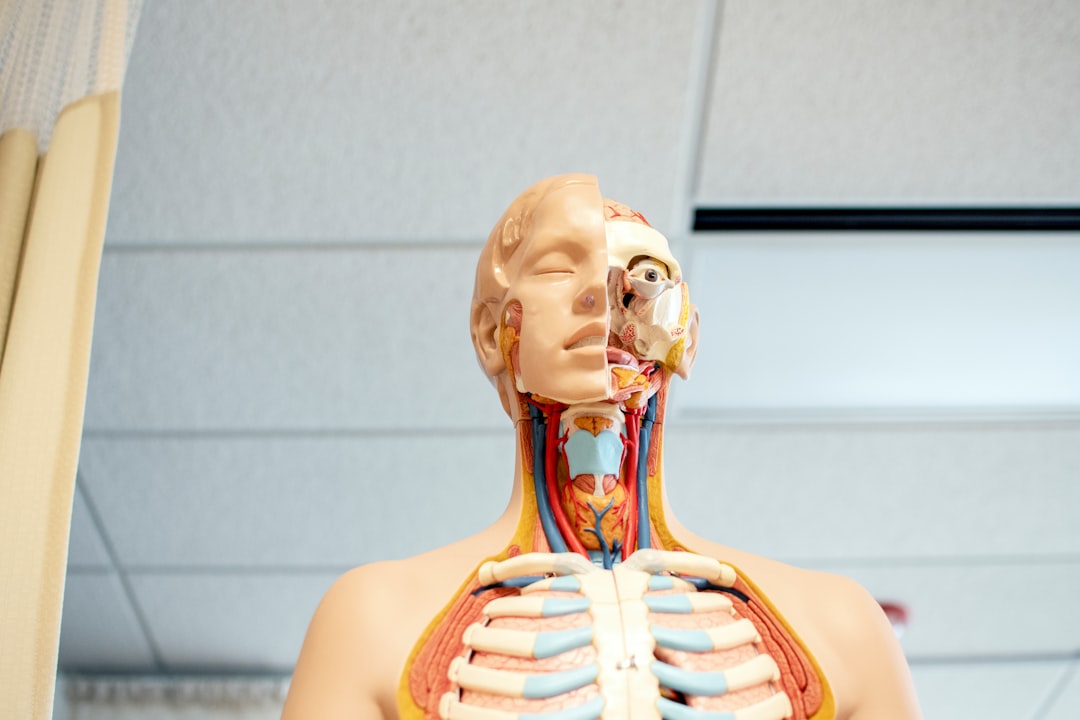
My friend Priya used Quizlet constantly in the prerequisite courses she took before nursing school, back when she still needed to memorize hundreds of muscle names and bone landmarks for a single anatomy midterm. She and her roommate would sit across the kitchen table at one in the morning, energy drinks going flat between them, taking turns racing the timed game mode to see who could clear the set faster. She passed that midterm with a grade she was proud of. I remember her showing me the set itself, dozens of cards deep, color-coded by region of the body. A year later, deep into her actual clinical rotations and trying to place a landmark on a real patient, she went completely blank and had to look it up on her phone in a supply closet. The set had done exactly what she asked of it, which was get her through one Tuesday morning in one classroom, and it was never asked to do anything past that. That gap is why she eventually built herself an Anki deck for pharmacology instead, because she needed the terms to survive past the final, not just reach it.
The fix is a different loop, built around spaced retrieval
The instinct after a story like Priya's is to go build a more thorough Quizlet set, more cards, more color-coding, a longer night at the kitchen table. That instinct treats the size of the study set as the problem, when the actual problem is that nothing brings the material back to you later, without you remembering to reopen the right set out of a growing pile. The fix that works is far simpler than a better set.
The real fix is spaced retrieval, pulling a fact back out of memory after real time has passed, at gradually widening intervals, rather than testing recognition again inside one sitting. Brainretain is built around exactly that loop, nothing more elaborate than that. You Collect the things you are studying, reading, or watching, in whatever format they came in, and the app turns what you Collected into spaced review without you ever building a set by hand. At the end of the day, everything gets folded into one recap quiz that pulls across all of it, so retrieval keeps happening on a schedule built for memory rather than for a single test date.
Who should stay on Quizlet, honestly

I will not pretend Quizlet is the wrong tool for everyone, because for a narrow, real use case it still is the right one. If you have one specific final in nine days and a professor-issued vocabulary list that needs drilling hard before that date, a fast study set and a night of the matching game is a reasonable, targeted move. Quizlet was built for exactly that kind of short-range cramming. It does that job well and never pretends to be more than that. What it was never built to do is carry a fact past the date of the test it was made for. Most of what we actually want to remember, the anatomy, the pharmacology, the language, has a life that runs well past that date.
The test was never the finish line
We treat "I aced the quiz" as proof that we learned something, and I think that assumption is the actual lie sitting underneath most study apps built around a single test date. Acing a matching game tells you the set is well made. It does not tell you whether the fact will still be there in a month, in a rotation, in a supply closet with a real patient in front of you. If you are tired of building study sets that work for exactly one day and then evaporate, that is the actual gap brainretain was built to close, and you can start closing it with the very next thing you are trying to learn, no set required.