
You watched forty minutes of it and a week later you have the title
Last month I watched a forty-minute video essay about the collapse of a famous tech company, nodded along the whole way through, and told a friend it was the best thing I had seen in ages. A week later she asked me what had actually gone wrong at the company. I produced the founder's name, a vague sense that there was fraud involved, and then nothing else worth saying out loud, and the whole argument that felt so clear on Tuesday was a smooth blank by Wednesday. If you have searched for how to remember what you watch on YouTube, you already suspect the problem is not the videos.
The forgetting curve does not care what format the lesson arrived in
In the 1880s a German psychologist named Hermann Ebbinghaus ran a long series of memory experiments on himself, learning lists of nonsense syllables and then testing how fast they leaked back out of his head. The line he drew from those results is called the forgetting curve. It shows that memory of anything new drops off steeply within a day or two and then keeps sliding more gently, so that by the end of a week most of it is gone unless something interrupts the decay. That curve was measured on syllables, and it applies just as cleanly to a video essay you watched on the couch, because your brain does not file an idea differently when it arrives through your ears instead of your eyes. The reason video feels like an exception is that watching is so smooth and effortless, and effortless is the condition under which the curve does its fastest work.
Watching again is the move that feels like studying and mostly is not
The instinct, when you notice a video has faded, is to queue it up again, or scrub back through the highlights, or read the pinned comment where someone summarized the whole thing. It feels like progress, because the second time through the narrator's points land with a warm click of recognition. Our minds are quick to read that recognition as knowledge, even though recognizing an argument while it plays and reconstructing it later from an empty head are two different skills. What moves the material into durable memory is the harder act of closing the tab and pulling the idea back out yourself. That small struggle of retrieval has a name in the research, the testing effect, and it holds up across formats including recorded video lectures. Watch something once and then make yourself recall it, and a week later you will hold far more of it than if you had rewatched it three times without ever looking away.
The other half of the engine is timing, and that one is called spaced repetition. It means spreading those small acts of recall across days instead of doing them in one sitting. Each time you reach for the idea, it arrives just as it is starting to dim, and pulling it back resets the curve a little higher than before. Recall paired with spacing is the entire mechanism, and almost everything else sold to you as a study trick is decoration laid on top of those two moves.
My niece and the autoplay that never stops
My niece is sixteen and watches video essays the way I once watched television, three and four in a row on topics that have nothing to do with each other, ancient Rome and then sneaker resale markets and then a teardown of a pop song's chord structure. She is curious and not lazy in the slightest about any of it. She can give you a passionate one-line verdict on every video she finished that week, and when I asked her in her kitchen to actually explain the Roman thing she had loved two days earlier, she got through one sentence, said "wait, no", laughed, and gave up. The phone just autoplayed straight into the next essay without either of us touching it. The autoplay is the part I keep thinking about, because it starts the next video before the last one has had a second to land, and the result is a week of videos that all dissolve into one warm fog of having-watched-something.
I do the same thing, and I am old enough to know better. I have a YouTube watch history that reads like a syllabus for a degree I cannot pass any exam in.
What to do today, before this one fades too
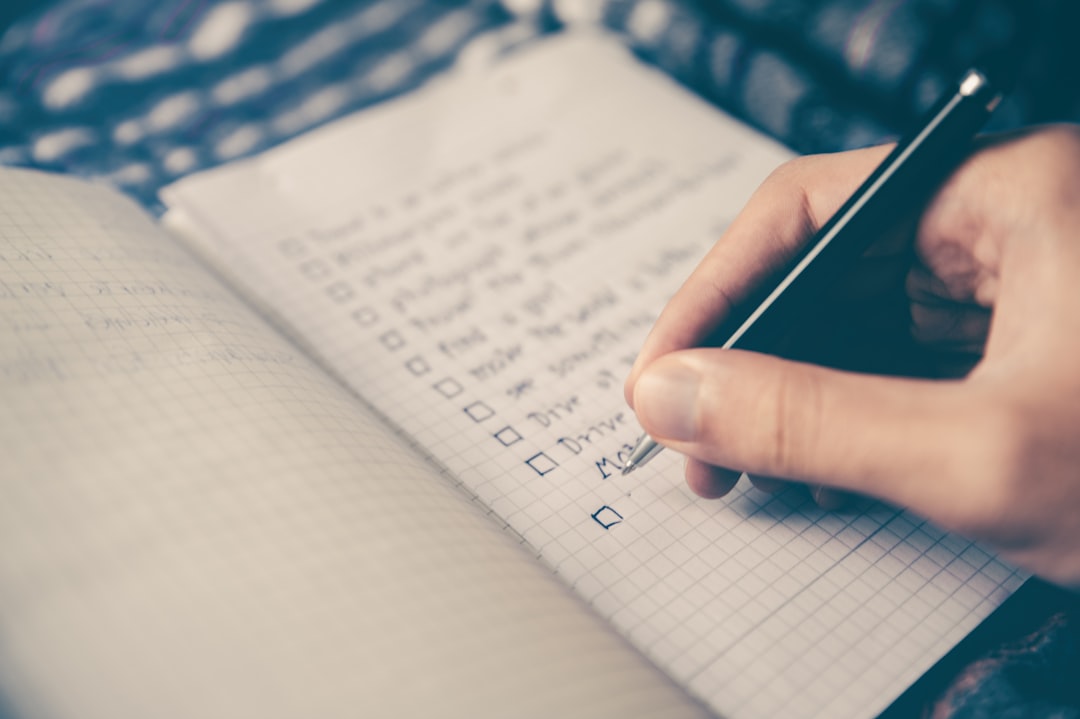
The do-it-today version is small enough to start with the very next video you finish, whether that is an essay, a tutorial, or a long interview you put on while cooking. The first instruction is the one that feels wrong: do not rewatch it, and do not open the comments. Instead, pause before you let autoplay grab you, and say out loud or jot down the two or three points you most want to keep, in your own plain words. It will feel slightly awkward, in the exact way that tells you retrieval is working. Then bring those same points back tomorrow, and once more a few days later, because that spacing is what tells your brain this particular video was worth keeping while the rest of the feed gets cleared away.
The friction nobody mentions, and the part worth handing off
The catch is that doing all of this by hand, for every video and article and podcast you take in, slowly turns into a second job you did not sign up for. You have to remember what you watched, remember to test yourself on it later, and remember to space those tests across the week, which is three new chores stacked on top of the watching itself. Most people quit around the third day, and I have been one of them more than once. Removing that particular friction is the whole reason brainretain exists in the first place. You Collect the things you consume as you go, the videos and articles and podcasts and books, and the app turns them into spaced-repetition review timed against the forgetting curve. At the end of the day it gathers everything into one recap quiz that pulls across all of it at once, whatever the format, with no flashcards to build and no streak to defend. What it hands back is the one part that actually builds the memory, the small daily act of pulling an idea out of your own head.
The watching was never the part that counted
We have half-convinced ourselves that watching something smart and well-made is the same as learning it, and I do not think it is. A good video essay is excellent at getting an idea into your head for an evening, and getting it to survive until next week is a separate skill that runs on retrieval and spacing no matter how gorgeous the editing was. The reassuring part is that the skill is learnable, and lighter work than the rewatching you are tempted toward right now. So here is the test: pick one video you watched this week, and tomorrow, before you look anything up, see how much of its actual argument you can rebuild from memory. If you would rather have all of that handled for you, so the videos you pour your evenings into finally stay with you, that is the job we built brainretain to do.